.svg)
AI for planning: closing the gap between budget and demand
Nicolai Harsbo Pedersen and Glen Roth on what AI changes in planning right now: budget vs demand, NOOS, and new product matching.

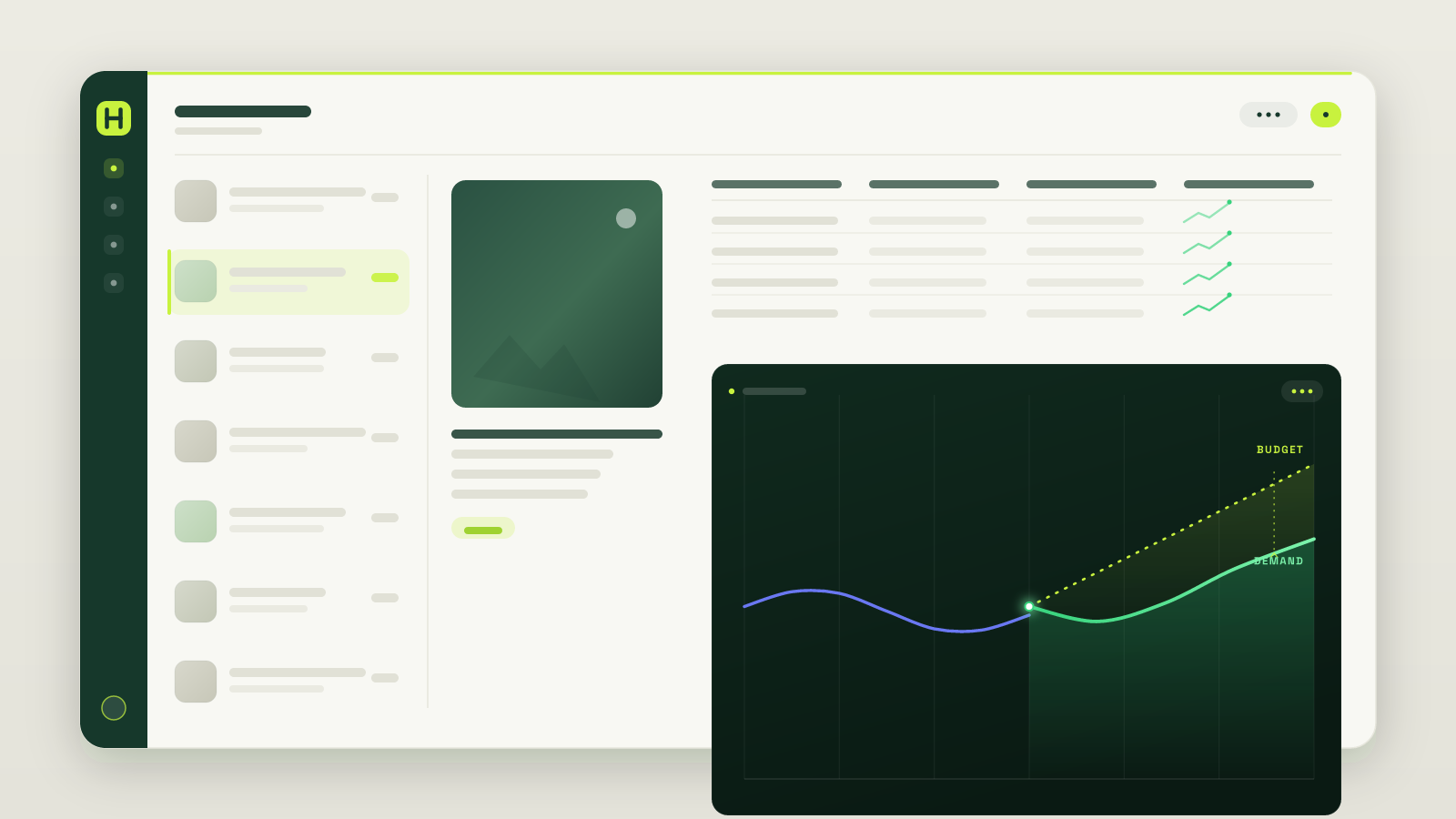
Part 1 of 3, distilled from our May 2026 online event AI in Demand Planning. A 30-minute conversation between Nicolai Harsbo Pedersen (Client Solution Manager at Hakio, 8 years in fashion operations) and Glen Roth (Enterprise Sales Director). This post focuses on the first of the three things they covered: where AI is changing how fashion brands plan budgets, NOOS replenishment and new product introductions.
The handoff that breaks
If you ask Nicolai Harsbo Pedersen, Hakio's Client Solution Manager and a former head of operations at Norse Projects, where most fashion planning processes break down, the answer is specific: the handoff between the financial budget and the operational plan.
"The most common breakdown happens in the handoff between the financial budget and the operational planning. It's a top-down revenue target, and then planners are expected to work backwards and translate this into POs, units. The two worlds rarely connect. At least they don't connect cleanly.", Nicolai explains.
The financial budget is built on assumptions: gut feel about sell-through, plans to open a new store or new market, the optimistic tone any board-level sales conversation tends to take. The operational plan has to translate those assumptions into committed POs and unit counts, often months later, with no formal moment to ask whether the original signal still holds.
Buying to a budget, not to demand
The result is a phrase Nicolai uses that landed hard with the audience:
"You end up buying to a budget rather than buying to demand. Because that's expected of you."
The point isn't that the budget is wrong. The point is that budgets are rarely revisited against demand. Budgets are set months before buying happens, and the assumptions behind them quietly age out while the planner is still being measured against the original number.
That's the gap. It's not a forecasting failure or a planner failure. It's a structural problem in how most fashion brands have organised the work.
Where AI is genuinely changing this today
Nicolai is careful not to over-claim. Asked where AI has the most impact in demand planning right now, his answer is narrow and specific: NOOS (never-out-of-stock evergreens) and NPI (new product introductions). Two areas, both well-suited to AI, for different reasons.
NOOS: the work AI removes
NOOS replenishment is the kind of repetitive, signal-rich work where AI delivers its clearest wins. Sales velocity, stock positions, lead times: all things AI can incorporate continuously and convert into replenishment suggestions and stock balancing. The planner's job shifts from maintaining Excel sheets to making decisions on top of recommendations that already exist.
"AI removes a lot of the work, a lot of the noise, a lot of the manual tedious tasks that you have to go through as a planner. […] It really helps the planner spend the time on decision-making rather than maintaining Excel sheets."
The takeaway from this part of the webinar phrased it as a rule: AI delivers the clearest wins where the work is repetitive and historical data is rich. NOOS is exactly that.
NPI: the work AI starts
New product introductions are the harder case. There's no sales history for a new style, so the question becomes: what did sell, that resembles this enough to use as a starting point?
This is the NPI matching problem, and the webinar's framing of it is one of the cleanest in the conversation:
"AI can help you find appropriate matches instantly. Rather than spending your cognitive energy on finding those matches and triangulating them and then condensing those signals into something you might trust, AI can do it in the blink of a second, propose it to you, and then ask you to put in your intuition on what's already been provided."
The slide behind this point showed Hakio's NPI matching surface: each new variant scored against historical variants for similarity across category, colour, price and other properties, with a quality grade attached (Great Match, Good Match, Bad Match). The planner doesn't disappear. The starting point does.
React and refine, don't construct from scratch
The thread that runs through both NOOS and NPI is the same: AI changes what the planner does on day one of a season.
"We're changing the starting point. Instead of a planner opening a blank Excel sheet, building everything again from scratch, an AI-driven platform can do this for you. So you spend your time on what really matters, looking into recommendations, taking those decisions, rather than building them."
Or, in the line that closed the section:
"React and refine, rather than construct."
That's the practical shift this part of the conversation pointed at. Not "AI plans for you." Not "the planner is replaced." A different starting point, where the work that's well-suited to AI (the repetitive, signal-rich, slow-to-recompute work) is already done by the time a human sits down to make the call.
Three things to take with you
- Budgets drift from demand reality between the time they're set and the time you buy. The gap between the financial budget and the operational plan is rarely formally revisited, and that's where buying-to-a-budget quietly overrides buying-to-demand.
- AI delivers the clearest wins where the work is repetitive and historical data is rich. NOOS replenishment is the obvious place to look first.
- For new products, AI starts from what similar products actually sold. Treat NPI matching as a starting point your planners refine, not a black box they accept.
This is the first of three posts in the series. To hear the full 30-minute conversation in Nicolai and Glen's own words, rewatch the online event here.
Stay ahead of the curve with our expert insights!
Subscribe to Hakio blog for curated insights on innovative demand planning and forecasting techniques. Sign up now and supercharge your strategy with our expert tips delivered straight to your inbox.




Interested in working with us?
Whether your career path to a role you’re interested in is traditional or not, please apply. We want to hear from all enthusiastic candidates.
Please add the title/team you are applying for in the subject line of your email, so the right person on our team will read it.